Once dismissed as “cuddle pedagogy,” now a neuroscientific fact
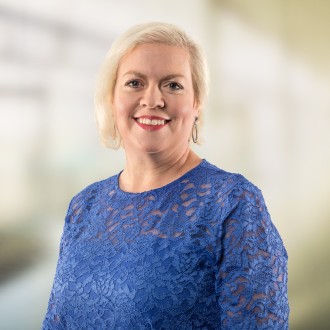
Interview with learning researcher and neuroscientist Prof. Dr. Michaela Brohm-Badry
A teaching approach based on selection, evaluation, and pressure? This is everyday reality at many German schools—but according to brain research, it is outdated and even harmful to the development of children and adolescents. Instead, the prevailing view today is to dare to foster greater well-being at school. Empirical evidence comes not only from the results of the PISA study but also from research into the neural processes through which our brain reacts to pressure and anxiety. Prof. Dr. Michaela Brohm-Badry is a keynote speaker at LEARNTEC, the trade fair and conference for digital education. We spoke with her about her concept of positive psychology, positive neuroscience, the German school system, and small and large adjustments for successful learning.
The rates of burnout and depression, especially among young people, are rising—in part due to the conditions in schools. What are the causes?
Prof. Dr. Michaela Brohm-Badry: That’s correct. We’re seeing an increase in the use of psychotropic medications, depressive disorders—even among children and adolescents—anxiety disorders, social anxiety, fear of social interaction, performance anxiety, and fear of school. The current situation is not particularly easy for children and adolescents: We face immense economic pressure, the open accessibility of media, violence, and an overwhelming number of stimuli, which also place a strain on the nervous system.
Added to this is the increased use of social media and, as a result, a sharp rise in feelings of loneliness. I recently spoke with a school principal: For him, the worst thing was that the schoolyard was silent during breaks because everyone was busy with their cell phones. And an Australian principal—where cell phones are now banned—said in an interview that during a break, a ball had shattered a window, and he was actually glad about it—as proof that the children were finally playing in the schoolyard again.
Of course, it’s not just social media, but an environment of increasing competitive pressure, a scarcity of resources, and a shortage of qualified staff in schools. We identify many causes, but the most important thing would be for children and adolescents to reconnect socially with one another and, above all, to experience warm, trusting interactions. The brain is a social organ.
What role does the school structure play?
Brohm-Badry: The school structure has exacerbated students’ mental health situation in many ways. For example, we have a completely outdated grading system that, by international standards, is essentially 15 years behind educational developments and is no longer compatible with international standards. We have a three-tiered school system—essentially Realschule, Gymnasium, Hauptschule, and perhaps special education schools. This means we sort children out at a very early stage of their cognitive development: at age 10 or 11, children are sorted into this school system based on their qualifications. Looking at the PISA findings, this is backward by international standards.
From a developmental psychology and neuroscience perspective, this early sorting is completely untenable because the brain is not fully matured by age ten. The prefrontal cortex—that is, all the executive functions for planning, organization, and goal-setting—doesn’t fully mature until around ages 20 to 22.
Other countries start assigning grades much later.
Brohm-Badry: In international comparison, many countries that perform well in the PISA study assign grades starting in sixth grade at the earliest, some even as late as ninth grade—and the latter because the job market absolutely requires students to present grades. Prior to that, many systems use only competency-based feedback grids. Students are invited to a meeting, can assess themselves, parent-teacher conferences are mandatory twice a year, and the child is supported in a competency-based way: What is your next step, where do you want to go next? This is a completely different way of approaching learning: Learning is not used as a tool for selection, but as an opportunity for development, as a space for growth. I strongly advocate making the school system as a whole more humanistic. In many Scandinavian countries, children enjoy going to school at every grade level.
Now, children are naturally curious and motivated. Motivation is important for successful learning. How do you manage to maintain this motivation?
Brohm-Badry: Motivation is a child of freedom. Autonomy is the most important factor in most studies. The word “must” doesn’t fit here, nor does any form of pressure exerted on a person. People want to decide freely. Of course, this isn’t easy in a school context, but even small things can have a big impact. If, as a child, you receive a worksheet with five tasks and are allowed to choose one or two of them, these are small incentives that give children and young people more freedom of choice.
School is mostly a system of pressure, whereas motivation is a system of pull. Motivation is the tension between the present and what we envision for the future. If I have a positive vision of this future, then an incredible pull develops. An example: If I know English, I can understand the lyrics of rappers. We can clearly demonstrate this neurologically: Neurotransmitters are released, particularly dopamine. When the goal is then achieved, we are flooded with neurotransmitters and endorphins—serotonin for satisfaction, and oxytocin when we’ve worked together with others and feel connected. It is important, however, that goals are not set too high: goals should be challenging, but not overwhelming. Then we experience a sense of success, and that in turn strengthens self-efficacy. Setting goals for oneself and then achieving them is, neurologically speaking, the foundation for further success, because the brain learns from success.
The third motivational factor is social connection. Motivation researchers say that you should seek out people who are already the way you want to be. For young people, this is typically the peer group: being surrounded by motivated, energetic people has incredible pull.
It is also crucial to create a classroom environment that is not competitive. If grades only encourage competition—and this is further reinforced by parents—it is poison for the brain and motivation. Instead, an open attitude is needed, a growth mindset rooted in the awareness that everyone can learn. Then a child’s effort is recognized, as are the small goals they have achieved. The focus should not be on what isn’t working yet, but always on progress—always, always focusing on progress.
Many of the points you mentioned could already be implemented, at least in small steps. When we look at the current school system: Are there one or two fundamental adjustments that, in your opinion, would greatly benefit children in their development?
Brohm-Badry: In an international comparison, we see clearly: comprehensive schools instead of a three-tiered school system would make sense. However, this is often not what parents want. Wolfgang Edelstein from Berlin has said that we still have the three-tiered school system because middle-class parents do not want their children to have contact with children who do not come from middle-class households. In the top-performing countries on the PISA rankings, however, we see that a single-tiered school system works. The comprehensive school system simply doesn’t work as well here because a so-called “creaming effect” occurs: parents with children eligible for the Gymnasium want their children to attend the Gymnasium and not the comprehensive school. As long as we have this selection system, the best students simply don’t go to other schools to help strengthen the others there. If separation is to take place, then at most into ability groups, but within a single school.
The second point is actually grading. Grades should be given no earlier than sixth grade, or better yet, later. Schools would need to make much greater use of the experimental clause, for example, to delay the separation into ability groups by two years or to replace traditional grading with competency grids. We have many schools that demonstrate this works. As a school administrator, I would take this freedom and structure instruction in a way that makes sense from a neuroscientific perspective. Fifteen years ago, many of these points were still hypotheses. Today, using fMRI or EEG measurements, we can scientifically demonstrate that when well-being and joy of life increase, executive functions kick in, and the amygdala—the fear center—calms down. Basically, we no longer need to argue—we’ve proven it neuroscientifically.
In the past, the view that children must experience joy while learning was often dismissed as “cuddle pedagogy.” It was assumed that children also want to learn under pressure. But that’s only partly true: People need well-being for the brain to function fully. When children come to school feeling anxious, the stress hormone cortisol is released, as is adrenaline; the amygdala signals alarm and blocks the pathway to the prefrontal cortex.
Many children come to school afraid of being evaluated again, of finding out they can’t do something, or perhaps even of being humiliated in front of the class. That closes off the mind. Instead, as teachers, we must always maintain a professional attitude: We learn together, I support you, and you can do this.
Earlier, we discussed the negative effects of digital technologies, such as excessive cell phone use. How and where do digital technologies make sense in a learning context? Where do they promote learning?
Brohm-Badry: Digital technologies, and especially AI, can wonderfully support learning processes. I recently attended a conference in the U.S. They’re already very advanced there when it comes to AI. For example, they focus on personalized programs: one child is interested in soccer, another is fascinated by crafts. And each child then receives personalized texts at the right learning level and on a topic that interests them. When children identify with a topic, their learning progress is significantly greater. What’s crucial, however, is that the human factor remains—that a person lovingly guides the process. AI also works incredibly well for revisions and corrections: AI can explain to students how and why they can further improve a text. AI works particularly well when the technology becomes a sparring partner for humans.
You have established the formula Performance = Work × Well-being over Time. This formula places the focus on the individual and their satisfaction. However, our systems are not very attuned to the individual—here, the goal is to achieve a specific performance within a certain time frame. How can the formula still be applied, both in an educational and a professional context?
Brohm-Badry: In a professional context, companies are now making much greater efforts due to the shortage of skilled workers. Many organizations and businesses, as well as schools, have realized that well-being is important for maintaining motivation and being able to perform. Even if we don’t justify this thinking on humanistic grounds, but purely from the perspective of performance structure, we can say with empirical evidence that well-being correlates with performance. Those who are satisfied work better, more intensely, longer, and more deeply. If companies still think that well-being is a soft factor, they are wrong. This is reflected in numbers, data, and facts, and we can prove it neuroscientifically. Those who merely drift along, do the bare minimum, or study only because they fear embarrassment at the blackboard the next day do not learn out of a love for the subject, nor do they learn deeply. Intrinsic motivation is severely compromised.
The New Work Evolution is taking place in parallel with LEARNTEC. Our impression: In the wake of the skilled labor shortage, there was a veritable New Work hype, but it has since shifted back in the opposite direction—keyword: Back to the Office. Can you explain this development?
Brohm-Badry: I perceive it that way as well, albeit without empirical evidence. The social climate has become harsher. Ethical or humanistic boundaries, particularly in communication, have been torn down in recent years, especially in the U.S. Such boundary-crossing humiliations harden the social climate. And there are political factions that support this hardening and use it to degrade people.
One must imagine: For around 2,000 years, since ancient Greece, there has been humanistic thinking—a way of thinking for the good of humanity. These humanistic values have shaped Europe and form the foundation of our political systems of democracy and participation. That these values are now being devalued is tragic. But I have hope that a new wave of growth is on the horizon, and with EUPONS we have established a forum through which we aim to strengthen positive momentum in Europe. It has quickly become a movement. The longing for positive momentum is very strong.
You mentioned humanistic values: What values and mindset do I need to make learning—or lifelong learning—work better?
Brohm-Badry: The very best project in your life is yourself: self-development. Every mentally healthy person wants to grow, wants to develop, and is curious. Once we realize this, we also understand that passivity and boredom are not good for our brains. The brain is constantly seeking stimulation. When it gets bored, the neural structures weaken. I would make it clear to a young person that there are many things they can do out there, but that the most important factor is the development of the self.
Thank you very much for the conversation!
The keynote address by Prof. Dr. Michaela Brohm-Badry, titled “And I think to myself: What a wonderful world. How we keep our students and ourselves healthy and happy,” will take place on Thursday, May 7, 2026, at 9:30 a.m. in the conference hall (2nd floor).